Listen to this episode on Spotify, Youtube, and Apple Podcasts.
***
What do you mean a chair can have over 500 different iterations — by a single designer?
That’s not a typo. Hans Wegner, one of Denmark’s most celebrated furniture designers, is credited with somewhere north of 500 chairs over his career. Not 500 sales. 500 distinct designs. He’s still known, simply, as “the master of the chair.”
The Idea
By the 1920s and ‘30s, Denmark had started moving away from the ornate, hand-decorated world of Skønvirke and toward something leaner: Danish Functionalism. It shared the Bauhaus belief that beauty should come naturally from function — but it added something distinctly Danish: a deep respect for the human body.
Danish functionalists didn’t just ask “does this work?” They asked “does this work for a person?” Furniture and lighting were designed around standard human measurements. Materials were left to show their own inherent beauty rather than being dressed up. The goal wasn’t luxury — it was practical, beautiful design for everyone, in step with Denmark’s growing social democracy.
This is the era that gave us the idea — now almost a cliché, because it’s been copied so often — that a well-designed chair shouldn’t just look good. It should fit you.
In Practice
Kaare Klint, often called the founder of modern Danish design, built his whole practice around human proportion. His 1933 Safari Chair was designed to be knocked down and packed flat for travel — no tools needed.
His 1927 Propeller Stool folds into a perfect cylinder. Function, solved elegantly.
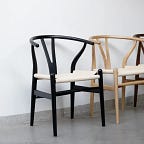
Hans Wegner took that foundation and ran — 500 times. His 1950 Wishbone Chair is still in production today: a Y-shaped bentwood armrest, a seat hand-woven from paper cord. Comfort, before anything else.
Nanna Ditzel, the “First Lady of Danish Furniture Design,” trained as a cabinetmaker in an almost entirely male field — and then rebelled against the wood-only orthodoxy, experimenting with fiberglass, foam, and wicker. Her 1959 Hanging Egg Chair is still iconic.
TAKT, a contemporary Danish furniture company, designed the Cross Chair — the first piece of furniture to earn the EU’s official environmental footprint score. Four pieces, six screws, fully disassemble-able at the end of its life. Same philosophy, new century.
Try This
Pick one everyday object you use constantly — an app, a tool, a process you run every week.
Ask it Klint’s question: what’s the one thing this absolutely has to do for the person using it? And what’s still attached to it that doesn’t serve that?
You don’t need an answer yet. Just notice what you’d cut.
Next up: Even the Door Handle Has a Job: what Danish “total design” can teach us about consistency.
✨ If you’d like to explore this live, see our Design Innovation Course. Those on the yearly Bloomerangas membership get access for free. More→


