

I’d love to introduce you to Emily Sharp — a licensed art therapist, psychotherapist, and writer whose work explores the deep link between creativity and healing.
I recently spoke with Emily on the Bloomerangas Podcast about how she blends traditional talk therapy with creative expression — helping clients unlock emotional resilience, insight, and self-trust through the creative process.
Emily explains how making art can be therapeutic, even if you don’t consider yourself an “artist.” “Art therapy is really just a form of psychotherapy,” she says. You still talk through life’s struggles as you would with any therapist, “but then you also have the opportunity to explore it visually.” This visual dimension often reveals perspectives that words alone can’t reach.
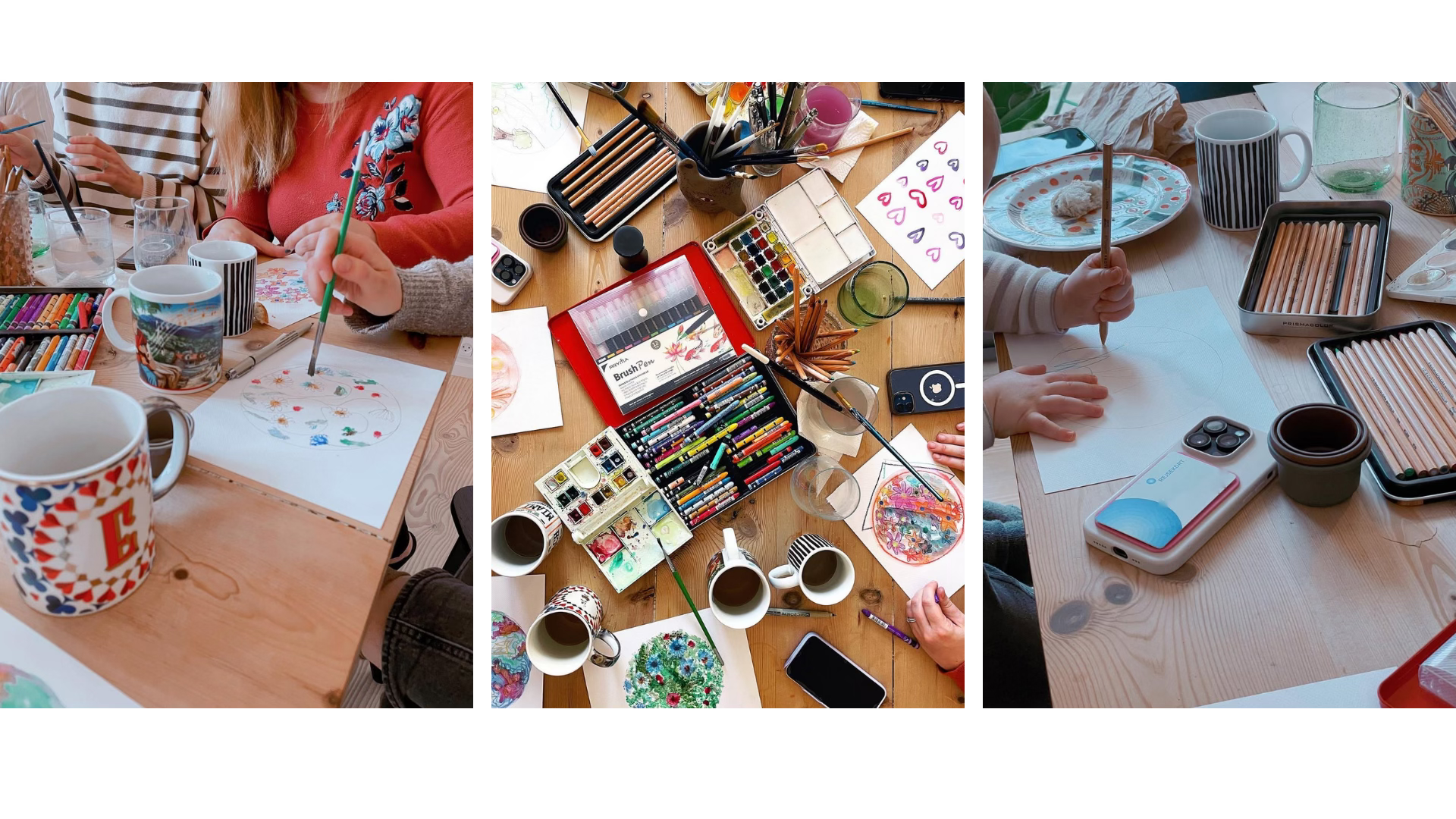
We spend so much of our lives in language — talking, writing, thinking — that we sometimes build protective walls around our emotions. Art has a way of softening those defenses, letting feelings emerge through color, shape, and movement. “The art-making process is cathartic in and of itself,” Emily says. “You feel like you can release something”from within.
In our conversation, she shares how she tailors creative tools to meet clients’ emotional needs.
“You feel more contained when I’m using pencil or marker,” she notes — ideal for moments of anxiety or overwhelm when structure brings a sense of control. On the other hand, looser, more fluid materials like watercolor or clay can “pull people out of stuckness,” gently inviting freedom, release, and emotional movement.
We also talked about what it means to balance creativity, work, and life. After over a decade in fast-paced New York, Emily relocated to Copenhagen and became a mother. The change in pace was transformative. “New York was really go, go, go… I was working a ton, and I loved it,” she recalls — but the intensity eventually led to burnout. In Denmark, she found the space to recalibrate, choosing a slower rhythm that now allows time for creative work, family, and a part-time private practice.
Life in Denmark, she notes, is shaped by a quiet trust in systems, a cultural ease that reduces stress. And that matters — especially for creative work.
“When we are in a not-stressed place and our nervous systems are settled, we’re able to be more creative,” Emily observes. In a calmer state, ideas come more freely. In her words, “taking care of one’s well-being isn’t just good for health — it directly feeds creativity.”
Continue reading on our website, where you’ll find more insights from Emily’s work — and watch the full talk on our YouTube channel.
All the best,
Egle Karalyte
Brand Strategist, Facilitator, and creator of Bloomerangas
💡 Explore the New Bloomerangas Website

We’ve just launched the Bloomerangas website — a growing library of tools, skills, and experiences to develop creative thinking. Designed for facilitators, educators, creatives, and team leads, it’s your competitive edge in the age of AI.
Access digital cards, creative prompts, gamified experiences, and online sessions to bring clarity, activate creativity, run better sessions, and spark breakthrough ideas — starting at just €8/month. bloomerangas.com


